At nine months, it’s easy to think your baby is still mostly… a baby. Sitting, babbling, maybe crawling if you’re lucky.
But underneath that, a 9-month-old is doing far more than most parents realize — quietly, without any announcement.
Here’s what’s actually going on at this stage.
1. They understand more than they can say
Language doesn’t start with words. It starts long before.
- Most 9-month-olds recognize their own name and respond to it
- They understand simple words like “no” or “bye-bye,” even without saying them
- They’re already picking up on tone — knowing when you’re pleased, worried, or firm
Your baby isn’t just hearing you. They’re decoding you.
2. They’re solving problems, not just reacting
This is the part most parents miss entirely.
- A 9-month-old will search for a toy that’s been hidden under a cloth — a real memory skill
- They start understanding cause and effect: shaking a rattle to make noise, pushing a button to get a reaction
- They test the same action repeatedly, not because they’re bored — but because they’re confirming a pattern
That’s not random play. That’s early logic in motion.
3. Their body is more capable than it looks
Physically, a lot is shifting at this stage too:
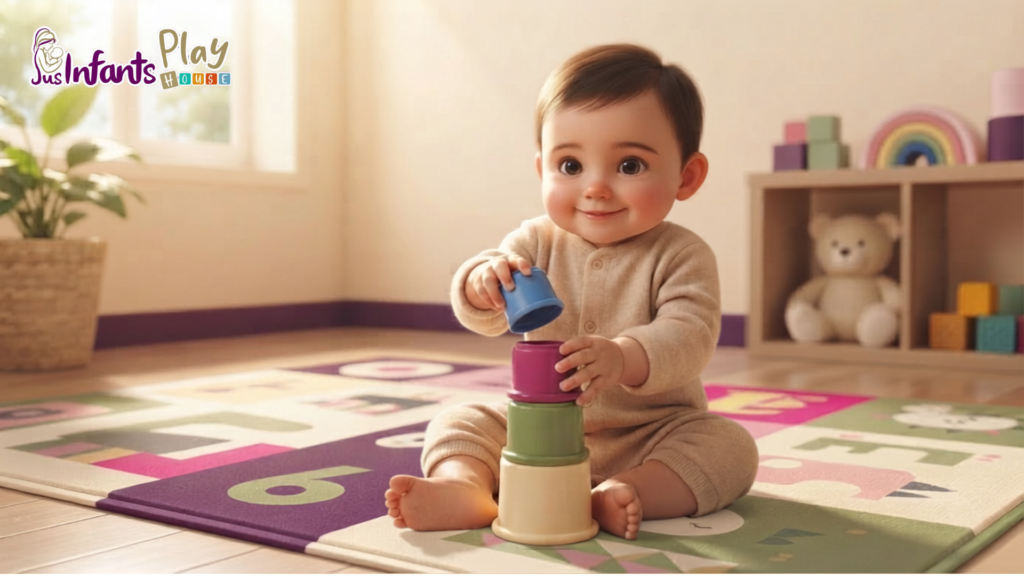
- Many babies can sit independently, and some begin pulling up to stand
- Fine motor skills are sharpening — expect a pincer grasp (thumb and finger) starting to emerge
- Crawling, cruising along furniture, or even early independent steps can all begin around now
Every wobble is muscle memory being built in real time.
4. They’re reading you socially, not just emotionally
By 9 months, babies are far more socially aware than they’re given credit for.
- They check your face for reaction before doing something new — known as social referencing
- They may show early signs of stranger awareness, clinging to familiar faces
- They start engaging in simple back-and-forth “conversations” through sounds, expressions, and gestures
This is the foundation of social confidence being laid, one small interaction at a time.
Most babies aren’t behind. Most parents just aren’t shown the full picture.
None of this happens because a baby is pushed. It happens because their brain and body are simply ready — and the right environment gently supports it.
The real question isn’t “is my baby on track.” It’s “what could they be doing next, with the right support.”
See what your baby could be doing next — book an assessment visit.